
A Closer Look at Nadi Tarangini Reports and the Science of Digital Nadi Analysis
A Closer Look at Nadi Tarangini Reports and the Science of Digital Nadi Analysis
 Dr. Gayatri Mulye
For centuries, Nadi Pariksha (pulse examination) has been one of the most valued diagnostic methods in Ayurveda. Through careful palpation of the radial pulse, experienced Ayurvedic physicians can assess the balance of the Tridoshas—Vata, Pitta, and Kapha—along with other functional aspects of the body.
Ayurveda has always emphasized understanding an individual’s unique constitution rather than treating everyone the same. Traditionally, physicians relied on detailed examinations, including Nadi Pariksha (pulse examination), observation, and questioning to assess a person’s health.
Today, digital technologies make it possible to document these observations related to Nadi in a structured, easy-to-understand format.
Nadi Tarangini is a digital pulse analysis system designed to assist Ayurvedic practitioners by objectively recording pulse signals and presenting them in an organized format. Rather than replacing the physician’s clinical expertise, it provides standardized pulse measurements that support Nadi Pariksha and clinical decision-making.
How Does Digital Nadi Analysis Work?
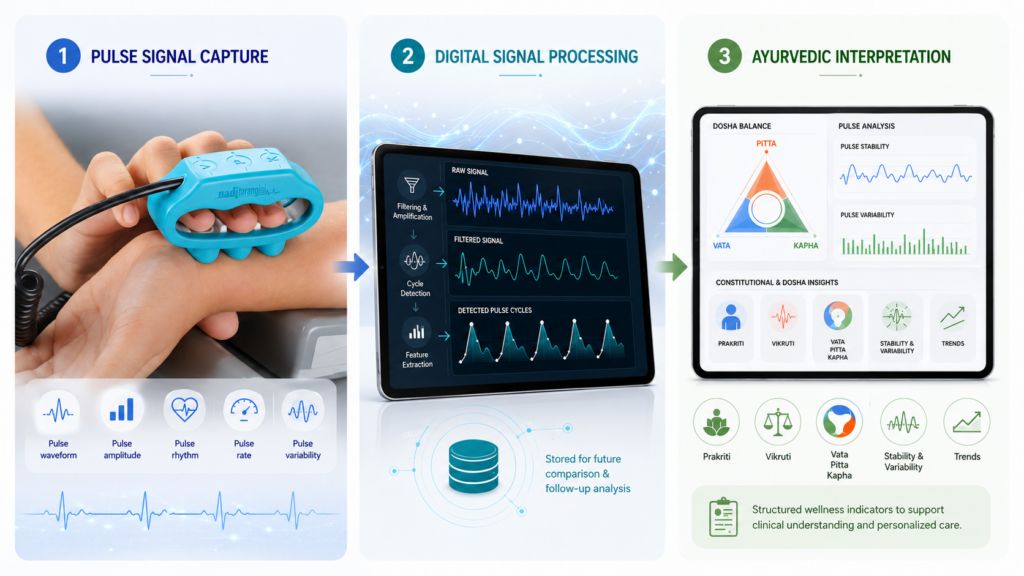
Nadi Pariksha can be executed in following steps by Nadi Tarangini
1.Pulse Signal Capture
The process begins with highly sensitive sensors placed over the radial artery at the wrist. These sensors detect subtle pressure variations produced by each heartbeat. The captured pulse signals are then converted into digital waveforms and processed using advanced signal analysis techniques.
The device records tiny pressure variations generated by each heartbeat, capturing:
•Pulse waveform
•Pulse amplitude
•Pulse rhythm
•Pulse rate
•Pulse variability
Unlike manual palpation, the digital system records these signals consistently, reducing variability between examinations.
2. Digital Signal Processing
The captured pulse signals are converted into digital data using advanced signal processing techniques.
The software filters and amplifies the pulse waveform, identifies individual pulse cycles and extracts measurable pulse characteristics such as waveform shape, timing, and intensity.
Nadi Tarangini stores the information for future comparison during follow-up visits. This creates a clean, reproducible pulse recording for analysis.
3. Ayurvedic Interpretation
After processing, the software analyzes pulse characteristics using algorithms developed from Ayurvedic principles and validated clinical datasets.
The analysis provides observations related to:
•Prakriti (constitutional profile)
•Vikruti (current Dosha imbalance)
•Relative predominance of Vata, Pitta, and Kapha
•Pulse stability and variability
•Trends that may indicate changing physiological states
The resulting information is organized into a structured wellness report that the physician interprets alongside the patient’s symptoms, medical history, lifestyle, and conventional Ayurvedic examination.
These outputs are presented as structured wellness indicators rather than definitive medical diagnoses.
Understanding the Digital Nadi Report generated by Nadi Tarangini
Reports generated by Nadi Tarangini typically contain several parameters that help visualize the pulse in greater detail.
Nadi guna report and Swasthya patrika are two main reports generated by Nadi Tarangini.
Nadi Guna Report-
A Nadi Guna report provides an Ayurvedic interpretation of pulse characteristics captured by a digital pulse analysis system. These reports include the following analysis.
Pulse Waveform Analysis
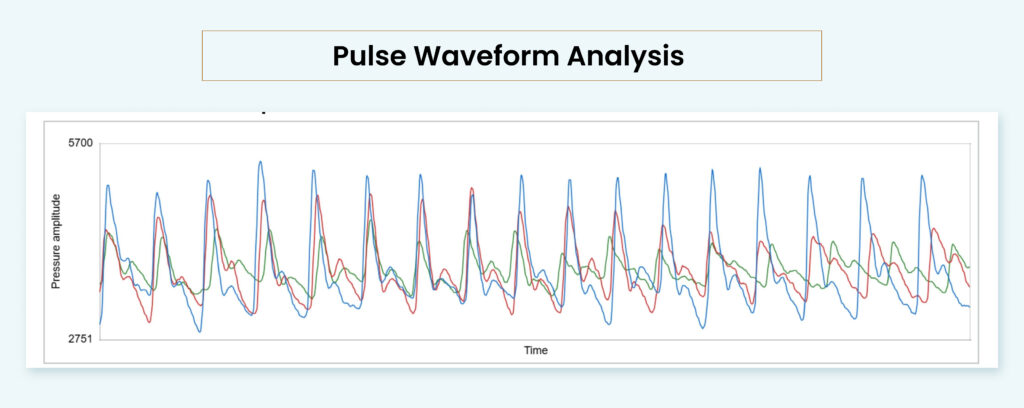
The waveform graphs display characteristics of the pulse recorded at the Vata, Pitta, and Kapha positions. Practitioners can interpret
•Nadi rhythm
•Nadi gati
•Nadi bala
•Nadi Guna
•Samata / Niramata
Predominance of the Dosha at current state of health can be assessed by using Nadi Tarangini.
Nadi Gati Analysis
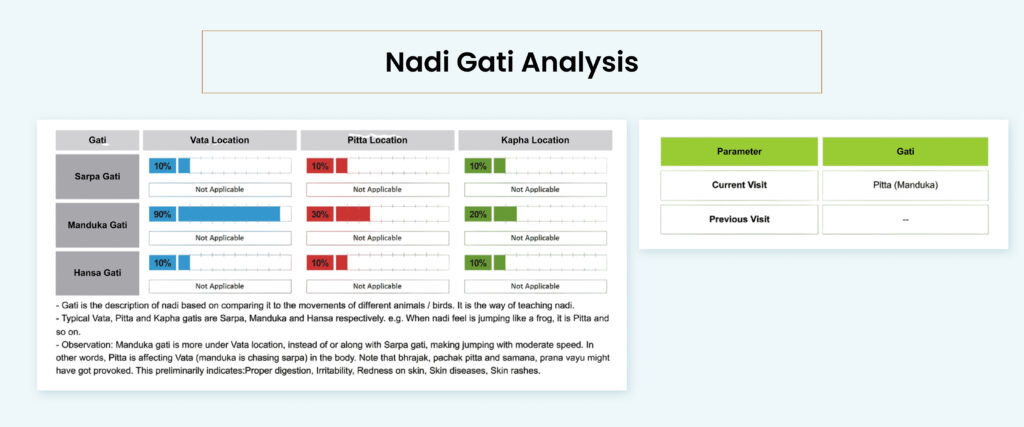
Nadi gati refers to the movement or rhythm of the pulse felt during Nadi Pariksha. In Ayurveda, the pulse movement is correlated with the predominance of the three doshas.
Digital Nadi systems may analyze these pulse waveforms objectively, but the traditional descriptions remain the foundation of interpretation.
Nadi Bala Analysis
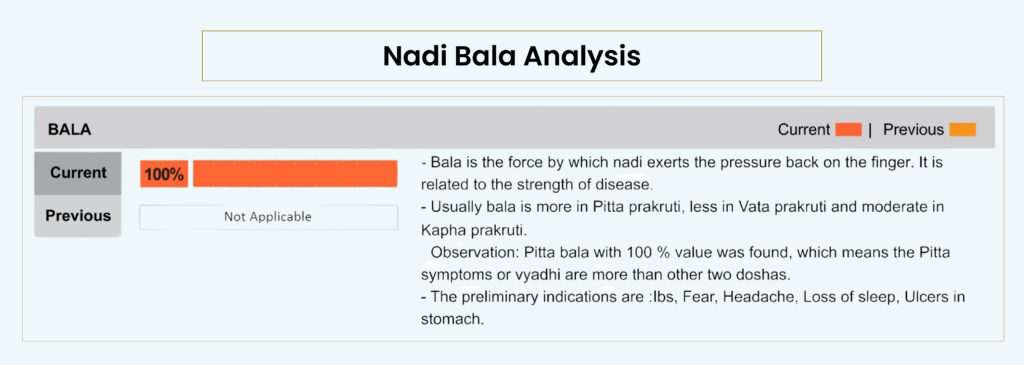
In Ayurvedic Nadi Pariksha (pulse diagnosis), Bala refers to the force, strength, or amplitude of the pulse.
The strength of a disease is determined by the characteristics and movement of Vata, Pitta, and Kapha doshas in the pulse. Usually when the pulse is hard, thick, heavy, and slow, the disease strength is greater.
Nadi bala or strength can be Pravar (excellent) – mentally and physically active, Madhya (moderate) or Avara (weak) – tired.
Nadi Guna (Qualitative Attributes) Analysis
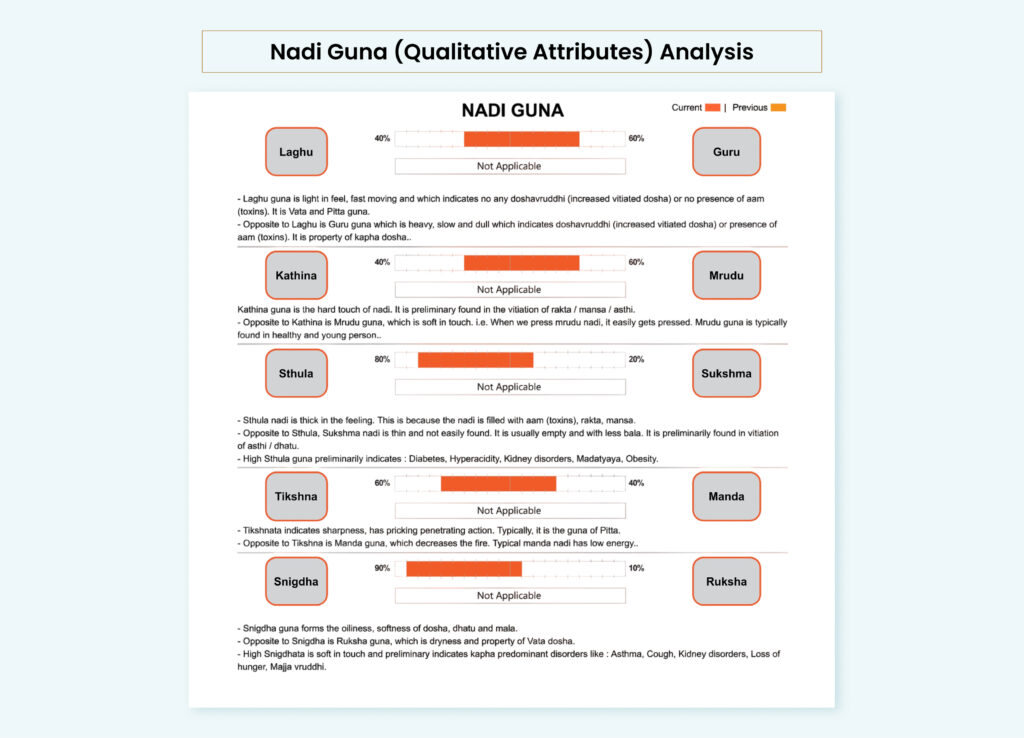
Nadi Guna refers to the qualitative characteristics of the pulse perceived during Nadi Pariksha. In Ayurveda, these qualities help the physician understand the functional state of the doshas, tissues (Dhatus), Agni, and the presence or absence of Ama.
Nadi Tarangini can objectively analyze these pulse qualities and present them in a measurable format.
Laghu – Guru (Lightness vs. heaviness of the pulse), Mrudu – Kathina (Softness vs. hardness), Sukshma – Sthula (Thinness vs. fullness/thickness), Tikshna – Manda (Sharpness vs. dullness), Snigdha – Ruksha (Unctuousness vs. dryness) are gunas that can be assessed by using Nadi Tarangini.
Clinical importance of assessment of Nadi Guna to Ayurvedic physician is to
•Understand the dominant dosha and its qualities.
•Evaluate Agni (digestive/metabolic strength).
•Detect possible Ama accumulation.
•Assess tissue nourishment and vitality.
•Individualize treatment, diet, and lifestyle recommendations.
•Monitor changes during follow-up.
Understanding these qualities helps determine appropriate dietary, lifestyle, and therapeutic approaches.
Agni (Digestive and Metabolic Capacity)
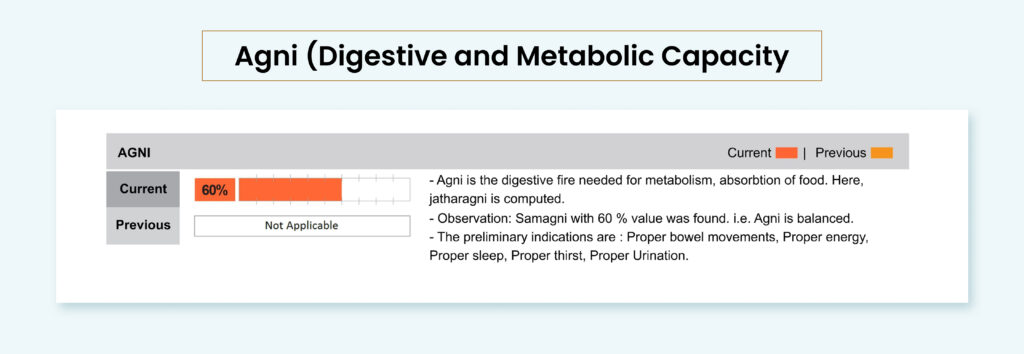
Agni represents digestive and metabolic efficiency. Balanced Agni is considered central to maintaining health in Ayurveda.
Based on assessment, physicians can recommend personalized lifestyle guidance including diet, daily regimen and treatment plans as per requirements.
Swasthya Darshika-
The Swasthya Darshika report is one such personalized wellness report that presents an individual’s Ayurvedic health profile through clear visual summaries, helping both practitioners and patients understand health patterns, monitor changes over time, and support preventive healthcare.
The report includes information such as:
•Individual Prakriti (body constitution)
•Current Dosha balance
•Organ-wise wellness observations
•Mental and emotional wellness indicators
•Digestive health assessment
•Lifestyle recommendations including yoga and exercise
•Dietary guidance
•Personalized preventive suggestions
Current Dosha predominance
One of the most important sections of the report explains an individual’s Prakriti, the natural balance of Vata, Pitta, and Kapha established at birth.
Knowing one’s constitution helps explain natural strengths, areas of vulnerability, lifestyle preferences, digestive tendencies, stress response, seasonal sensitivities etc.
When current Dosha levels analyzed by Nadi Tarangini differ from the constitutional balance, practitioners can identify potential imbalances and recommend suitable lifestyle modifications before they progress further.
The goal is not to diagnose diseases but to provide a holistic picture of overall health and wellness.
Digestive and nutritional vitality
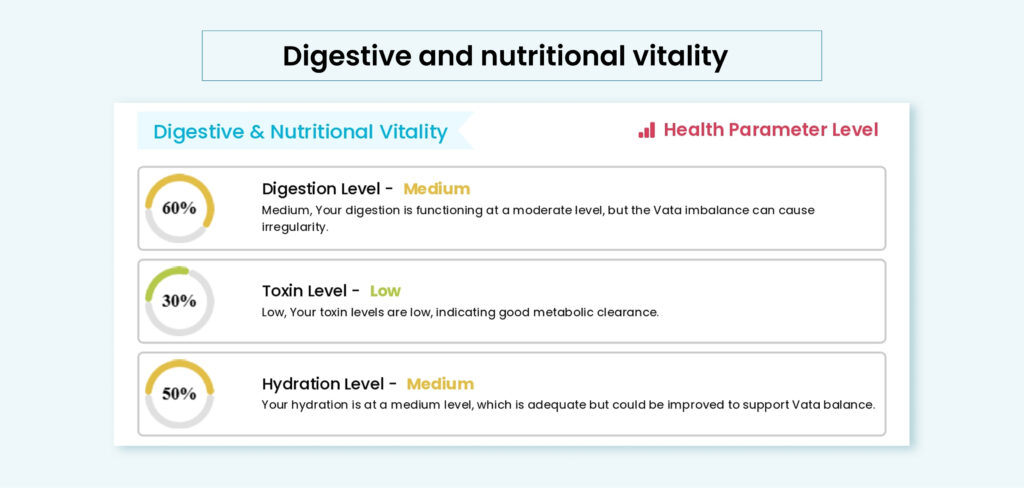
The Swasthya Darshika report highlights digestive wellness because healthy digestion supports proper nourishment. It includes digestion levels, toxic levels and hydration levels.
Poor digestion may contribute to Dosha imbalance. Long-term digestive disturbances can affect multiple body systems.
Based on these observations, practitioners can recommend dietary modifications, meal timing, and lifestyle adjustments appropriate for the individual.
Body strength
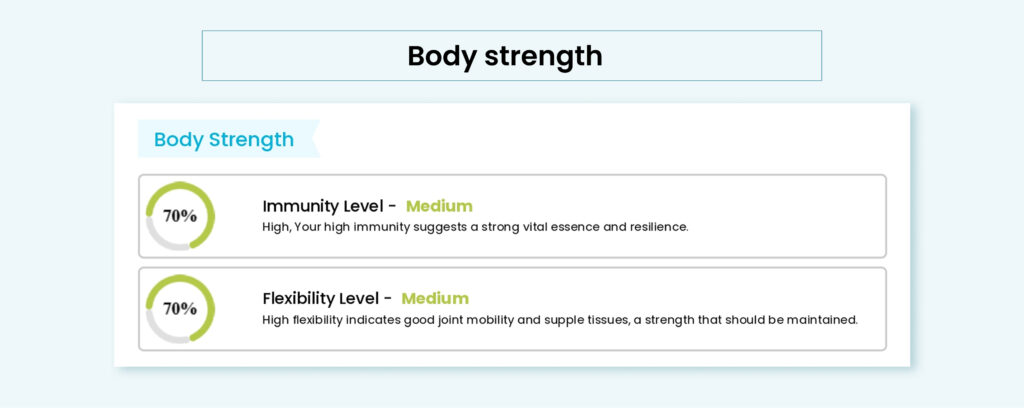
Body strength or immunity represents the body’s resilience and defence mechanisms.
Good strength indicates strong immunity, better recovery, and sustained energy. Lowered strength can be responsible for increasing susceptibility to infections, fatigue, and slower healing.
Organ Insights
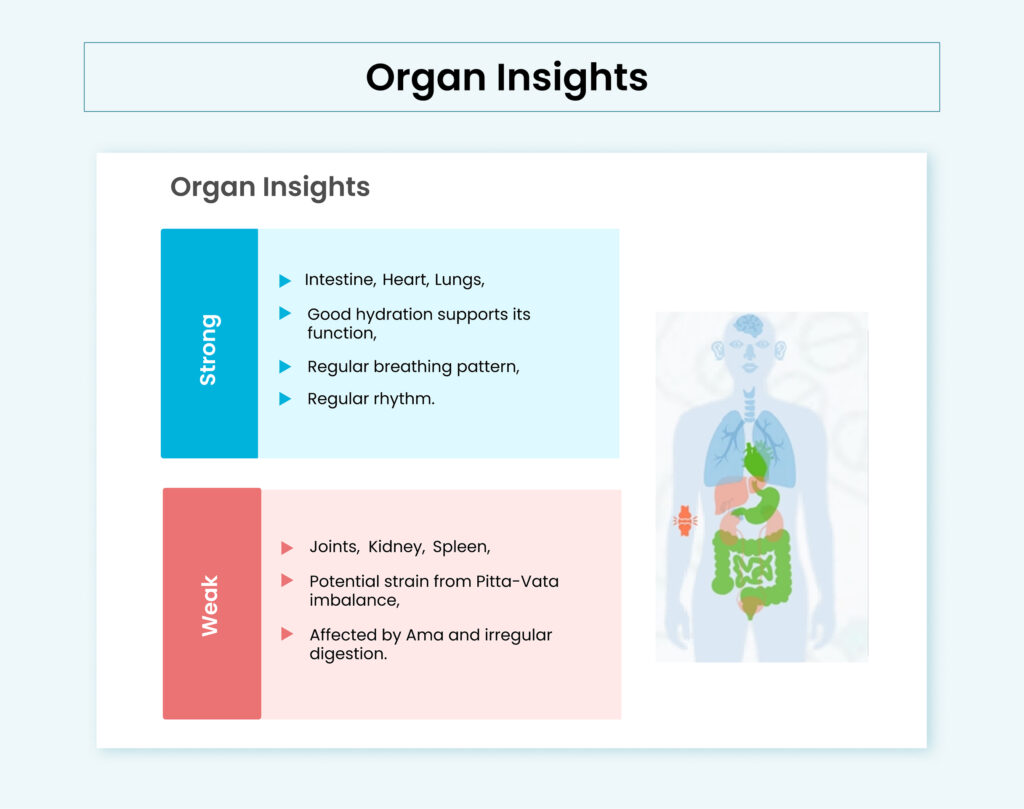
The report evaluates different organ systems to identify areas that may need attention. These insights are meant to encourage preventive care and do not confirm disease.
Lower-performing systems may benefit from lifestyle modification, dietary changes, and follow-up monitoring.
Mental and Emotional Well-being
Ayurveda recognizes that physical and mental health are closely connected.
The report also considers wellness parameters related to emotional balance, helping practitioners discuss:
•Stress management
•Relaxation practices
•Meditation and mindfulness
This holistic approach encourages overall well-being rather than focusing only on physical symptoms.
Potential Risk
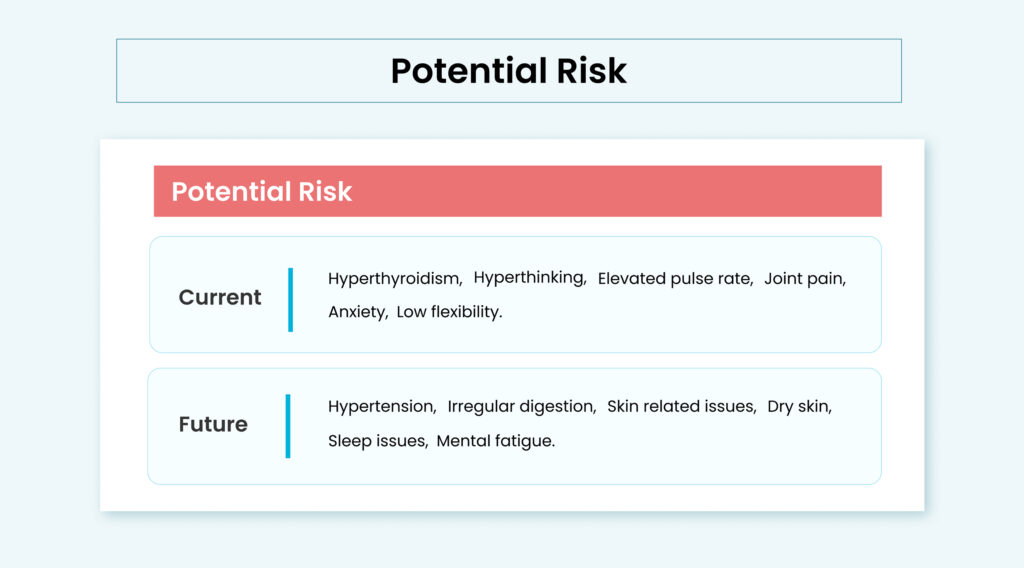
The report divides risks into Current and Future. It includes associated risks due to Dosha Imbalances which can be easily detected at a very early stage with the help of Nadi Tarangini.
Personalized Diet and Lifestyle Guidance

Unlike generic health advice, the report offers recommendations based on the individual’s Ayurvedic profile.
These may include:
• Foods that support Dosha balance
• Foods to be consumed in moderation
• Daily routine suggestions
• Sleep recommendations
• Exercise guidance
• Seasonal wellness practices
• Stress management approaches
Such personalization helps patients follow practical recommendations that suit their constitution rather than adopting one-size-fits-all wellness plans.
Why Digital Reports Matter
Traditional pulse examination relies heavily on the practitioner’s experience and memory. Digital reports introduce consistency by documenting pulse findings in a standardized format. This allows physicians to:
•Compare pulse observations across follow-up visits.
•Monitor changes during treatment.
•Explain health trends more clearly to patients.
•Maintain organized digital clinical records.
•Support evidence-based documentation in Ayurvedic practice.
When integrated into routine practice, digital pulse reports provide objective documentation that can enhance clinical confidence while preserving the principles of traditional Ayurveda.
Summary
Nadi Tarangini is a digital pulse analysis system that supports traditional Ayurvedic Nadi Pariksha by capturing pulse signals through sensitive sensors and converting them into standardized digital reports.
The system records pulse characteristics such as waveform, rhythm, rate, amplitude, and variability, then processes this data using advanced signal analysis.
Based on Ayurvedic principles, it generates insights into Prakriti (constitution), Vikruti (current Dosha imbalance), Nadi Gati, Nadi Bala, Nadi Guna, Agni, and overall wellness. These findings are presented as structured wellness indicators to assist clinical decision-making.
Nadi Tarangini generates two key reports:
Nadi Guna Report: Focuses on pulse qualities, Dosha predominance, pulse strength, rhythm, and qualitative attributes that help physicians assess digestive health, tissue vitality, Ama, and guide personalized treatment.
Swasthya Darshika: Provides a comprehensive wellness overview, including Prakriti, current Dosha balance, digestive and nutritional status, immunity, organ wellness, mental well-being, potential health risks, and personalized diet and lifestyle recommendations.
By creating standardized digital records, Nadi Tarangini enables Ayurvedic practitioners to monitor patient progress over time, compare follow-up assessments, improve patient communication, and maintain organized clinical documentation. It combines the wisdom of traditional Ayurveda with modern digital technology to support more informed, preventive, and personalized patient care.