
How Nadi Tarangini Is Bringing Consistency to Multi-Doctor Ayurveda Clinics

How Nadi Tarangini Is Bringing Consistency to Multi-Doctor Ayurveda Clinics
 UserName
Ayurvedic healthcare is increasingly evolving from individual consultations to integrated, multi-specialist clinical practice. Ayurvedic hospitals today may have multiple consultants with expertise in different areas, allowing patients with complex and chronic conditions to receive care from more than one practitioner.
This becomes particularly important when a patient’s condition involves multiple organs or interconnected systems, where management may require the combined clinical experience of different Ayurvedic experts. For effective treatment, these practitioners need access to a clear understanding of the patient’s previous assessments, clinical observations, treatment plans, and response to therapy. Without structured documentation, important clinical information can become fragmented across different consultations.
This is where Nadi Tarangini can play a valuable role. By digitally capturing and documenting pulse assessments and generating structured reports, Nadi Tarangini can provide a common clinical reference that can be reviewed by different consultants. Instead of each practitioner working with isolated observations, the patient’s digital record can help create a more connected view of the clinical journey.
Nadi Tarangini can contribute to continuity, standardized documentation, consultant-to-consultant communication, and collaborative clinical decision-making, helping bring different areas of Ayurvedic expertise together around the same patient.
From Multiple Consultations to One Connected Clinical Picture
A structured patient record can bring together assessments from different consultations, allowing practitioners to view the patient’s history rather than treating every visit as an isolated encounter.
This is where digital documentation can make a significant difference.
Nadi Tarangini can support this process by providing a digitally recorded and structured pulse assessment that becomes part of the patient’s clinical record. When different consultants have access to this information alongside their own clinical observations, it can provide a common reference point for discussion and follow-up.
In a multi-consultant Ayurvedic hospital, this can help transform fragmented consultations into a more coordinated clinical journey – where different experts contribute to the same patient’s evolving record.
How Nadi Tarangini Is Bringing Consistency to Multi-Doctor Ayurveda Clinics
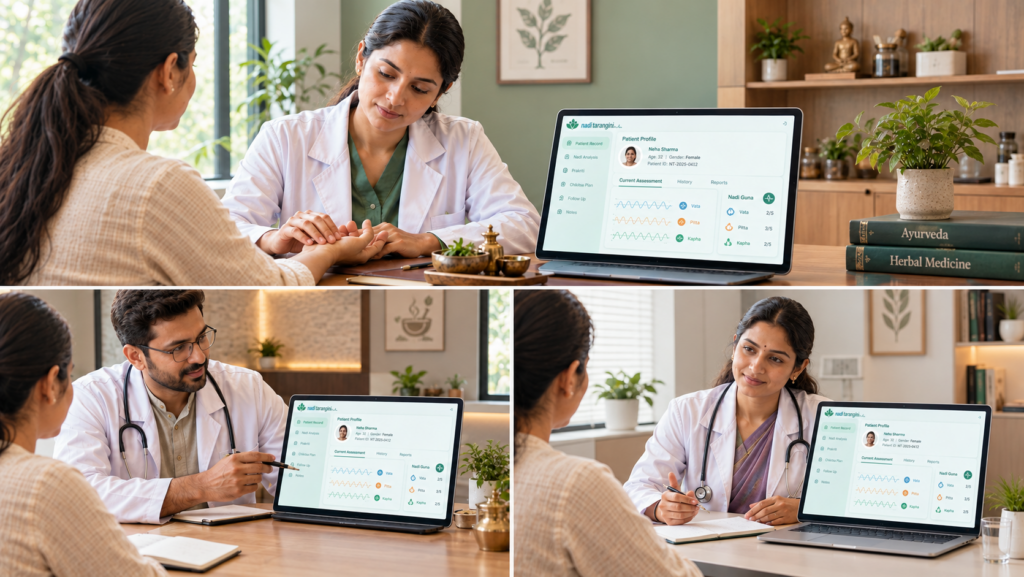
As Ayurveda clinics grow, many practices are moving beyond a single-doctor model.
Multi-doctor clinics allow practitioners to serve more patients, offer specialized expertise, and provide greater accessibility.
Every Ayurvedic practitioner develops their own style of consultation. Differences in how pulse observations are recorded, how clinical findings are documented, and how follow-ups are assessed can sometimes make it difficult for another doctor to understand the complete patient journey. Over time, this can affect continuity of care and make collaborative practice more challenging.
In a single-doctor practice, the practitioner often has a continuous understanding of the patient’s history. In a multi-doctor clinic, however, patients may consult different practitioners depending on availability, specialization, or follow-up requirements.
This is where Nadi Tarangini can become an important part of a modern, multi-doctor Ayurveda clinic. Nadi Tarangini introduces a digital approach to pulse assessment by capturing pulse waveforms and generating structured analytical information.
Standardizing the Nadi Assessment
Nadi Pariksha has always been an important component of Ayurvedic clinical practice. However, when multiple practitioners assess patients, maintaining consistency in how pulse-related observations are captured can be challenging.
Instead of relying only on handwritten observations, the clinic can maintain a digital record of the pulse assessment alongside the patient’s consultation information. This can be particularly useful when a patient returns for a follow-up with a different doctor.
The practitioner can review the previous assessment, understand the documented findings, and continue the consultation with greater context.
One Patient, One Continuity of Record

Consistency is not only about the assessment, it is also about what happens to the information afterward.
Digital patient records allow important consultation details to remain accessible within the patient’s clinical history. Previous consultations, assessments, treatment plans, and follow-up observations can be reviewed as part of the ongoing patient journey.
For a multi-doctor clinic, this creates an important advantage.The patient record becomes the common source of clinical information, rather than relying entirely on individual memory or handwritten case papers.
Structured Reports for Better Clinical Communication
A structured report can also improve communication between practitioners.
When clinical information follows a consistent format, it becomes easier for another doctor to review the patient’s previous assessment. Nadi Tarangini reports can provide a structured representation of pulse-related observations that can be considered alongside the practitioner’s clinical examination and other patient information.
This can be especially valuable when:
– A patient changes doctors within the same clinic
– A senior practitioner reviews a junior practitioner’s case
– A specialist becomes involved in an ongoing case
– A patient returns after a longer gap
– The clinic conducts regular follow-up assessments
The result is a more organized clinical workflow where practitioners can collaborate without losing the context of previous consultations.
Supporting Collaborative Ayurveda Practice
A successful multi-doctor clinic is not simply a collection of individual practitioners. It is a clinical team working around a shared patient-care process.
Digital systems can help create this shared framework.
With structured records, practitioners can review previous assessments, document their own findings, and contribute to a continuous patient history. This supports a more collaborative environment while still allowing each practitioner to apply their own clinical expertise.
Ayurveda is individualized, and clinical judgement remains central to patient care.
Nadi Tarangini therefore becomes more than a pulse assessment technology. Within a multi-doctor practice, it can form part of the clinic’s broader digital clinical documentation ecosystem. The purpose of digital standardization is to make the process of capturing and accessing information more consistent. Over multiple consultations, structured records can therefore support a more informed and continuous clinical discussion.
As Ayurveda clinics continue to evolve, this combination of practitioner expertise, standardized digital assessment, and continuous documentation can help create a more connected and collaborative clinical environment.
The future of Ayurveda practice is not necessarily about choosing between traditional clinical wisdom and modern technology. It is about finding ways for technology to support the way practitioners already work.
For multi-doctor clinics, Nadi Tarangini can help create greater consistency in pulse assessment, strengthen digital documentation, and make patient information easier to review across consultations.
Nadi Tarangini is not about replacing the Ayurvedic practitioner’s judgement. It is about giving that judgement a more structured digital foundation helping every doctor see the patient’s journey more clearly and contribute to more consistent, connected care.
Summary
As Ayurveda clinics increasingly adopt multi-doctor and multi-specialist models, maintaining consistency and continuity of patient care becomes essential. Differences in consultation styles, pulse observations, and documentation can make it difficult for practitioners to understand a patient’s complete clinical journey. Nadi Tarangini addresses this challenge by digitally capturing pulse assessments and creating structured records that can serve as a common clinical reference for multiple consultants.
By integrating digital pulse assessment with patient documentation, Nadi Tarangini can support standardized recording, easier review of previous consultations, better consultant-to-consultant communication, and more coordinated follow-up. It does not replace the practitioner’s clinical judgement; instead, it provides a structured digital foundation that helps Ayurvedic doctors connect traditional expertise with modern documentation. Ultimately, this can help multi-doctor clinics deliver more consistent, connected, and collaborative patient care.