
Understand Digestion Level score analysed by Nadi Tarangini
Understand Digestion Level score analysed by Nadi Tarangini
 Vaidya Tejaswini Bhale
Gut Health in Modern Medical Science and Digestive Health in Ayurveda
Gut health refers to the proper functioning and balance of the gastrointestinal (GI) tract, which includes the stomach, intestines, and the microorganisms living within them. In modern medical science, gut health is closely associated with the gut microbiome—a complex community of trillions of bacteria, fungi, and other microbes residing mainly in the intestines. These microorganisms play essential roles in digestion, nutrient absorption, immune function, and overall health.
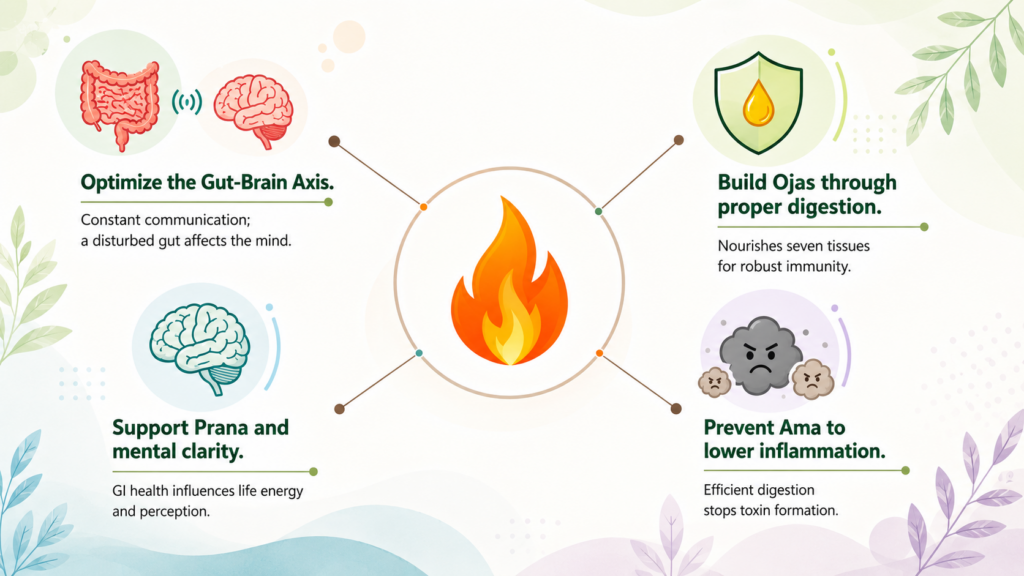
A healthy gut efficiently digests food, absorbs nutrients, and eliminates waste. It also acts as a protective barrier against harmful pathogens and toxins. Scientific research has shown that gut health influences many aspects of well-being, including immunity, metabolism, mental health, and inflammation. An imbalance in gut microorganisms, known as dysbiosis, may contribute to digestive disorders such as irritable bowel syndrome (IBS), inflammatory bowel disease (IBD), constipation, diarrhea, and even conditions like obesity and depression. Factors that support good gut health include a balanced diet rich in fiber, fruits, vegetables, fermented foods, adequate hydration, regular exercise, proper sleep, and stress management. The Gut- Brain axis is the crucial part of physical and mental health connected to understand.
In Ayurveda, the ancient Indian system of medicine, digestive health is considered the foundation of overall health. The central concept governing digestion is Agni, which means the digestive fire. According to Ayurveda, strong and balanced Agni enables proper digestion, absorption, and assimilation of nutrients, while weak or disturbed Agni leads to the formation of Ama (toxins or undigested metabolic waste), which is believed to be the root cause of many diseases.
Ayurveda classifies individuals according to three doshas—Vata, Pitta, and Kapha. Digestive health depends on maintaining balance among these doshas. Different foods, lifestyles, seasons, and emotional states can affect Agni and dosha balance. It enhances the ojas or vitality of ant person. Ayurvedic principles recommend eating freshly prepared food, consuming meals at regular times, avoiding overeating, chewing food properly, and eating according to one’s body constitution and digestive capacity.
Herbs and spices such as ginger, cumin, fennel, turmeric, and coriander are commonly used to support digestion. Ayurveda also emphasizes mindful eating, adequate rest, and stress reduction, recognizing the connection between the mind and digestive system.
While modern medicine focuses on gut microbiota, physiology, and nutrition, Ayurveda emphasizes Agni, dosha balance, and holistic lifestyle practices. Both approaches agree that healthy digestion is essential for maintaining physical and mental well-being. Together, they provide complementary perspectives on achieving optimal digestive and overall health.
Digestive Disorders Due to Dosha Imbalances in Ayurveda
According to Ayurveda, digestion is governed by Agni (digestive fire). When Agni becomes weak, irregular, or excessive due to imbalances in the three doshas—Vata, Pitta, and Kapha—digestion is hampered, leading to the formation of Ama (undigested toxins). Ama accumulates in the body and obstructs normal physiological functions, eventually contributing to disease.
1. Vata Imbalance and Digestion
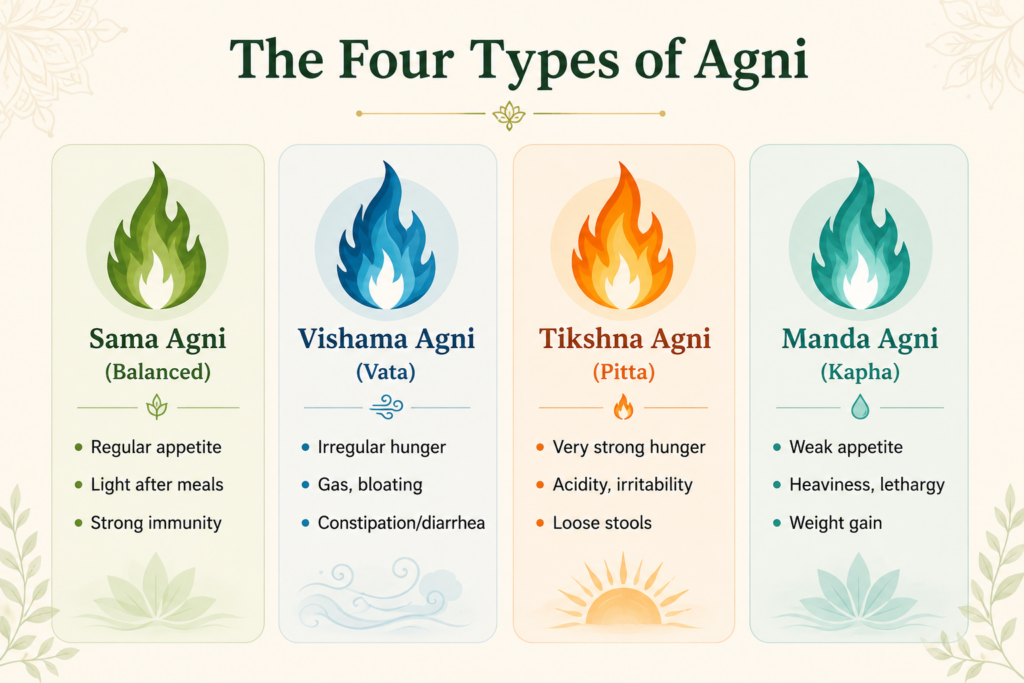
Vata is associated with movement, dryness, and irregularity. When Vata becomes aggravated due to excessive stress, irregular eating habits, fasting, lack of sleep, or consumption of dry and cold foods, digestion becomes erratic. This condition is known as Vishama Agni (irregular digestive fire).
Nadi characteristics: Under vata and pitta location
- Visham/Irregular, unstable rhythm
- Laghu/ Light and
- Vegavati/ fast moving
- variable/ fluctuating under vata and pitta location
Common symptoms include:
- Bloating and abdominal distension
- Gas and flatulence
- Constipation
- Irregular appetite
- Variable bowel movements
Long-term Vata imbalance can lead to poor nutrient absorption, weight loss, fatigue, anxiety, insomnia, and weakened immunity.
2. Pitta Imbalance and Digestion
Pitta governs metabolism and transformation. Excessive intake of spicy, oily, fried foods, alcohol, or prolonged anger and stress can aggravate Pitta. This results in Tikshna Agni (overactive digestive fire).
Nadi characteristics: Under Pitta location
- Tikshna/ Strong, forceful, bounding pulse
- Ushna/ Warmth felt in the pulse
Common symptoms include:
- Excessive hunger and thirst
- Acidity and heartburn
- Burning sensations in the stomach
- Loose stools or diarrhea
- Inflammation in the digestive tract
When Pitta remains aggravated for long periods, it may contribute to ulcers, inflammatory conditions, irritability, skin disorders, and excessive heat in the body.
3. Kapha Imbalance and Digestion Kapha is associated with stability, heaviness, and lubrication. Excessive consumption of heavy, oily, sweet foods, overeating, lack of physical activity, and excessive sleep can increase Kapha. This leads to Manda Agni (slow digestive fire).
Nadi characteristics: Under kapha and pitta location
- Guru/ heavy,
- Manda/ Slow,
- Sthula/ broad, and
Common symptoms include:
- Sluggish digestion
- Feeling of heaviness after meals
- Nausea
- Excess mucus production
- Weight gain and lethargy
Chronic Kapha imbalance may result in obesity, metabolic disorders, congestion, low energy levels, and reduced vitality.
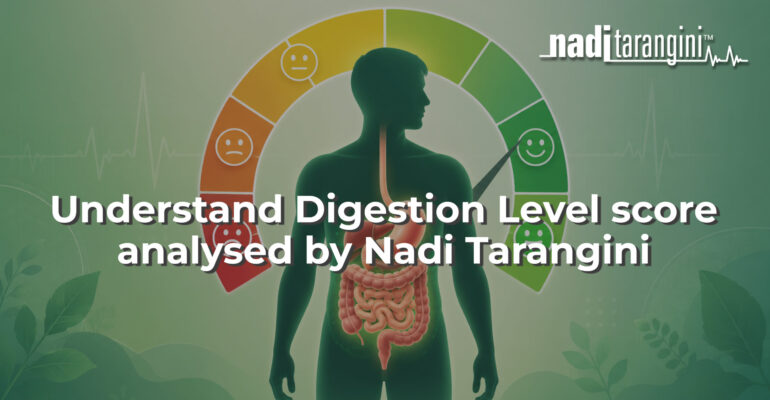
Nadi tarangini Digestion Quotient/ Score/ Health
Considering all above fundamentals of Ayurveda, digestion/ agni, guna/ properties of vata, pitta , kapha and impact on each other when they are in an imbalance state leads to variations in digestion health/ score.
If digestion health
- Weak/ Mand – it is denoted in red and ranges between 10-30
- Moderate/ Madhyam- denoted as orange and ranges in 40-70
- Strong/ Tikshna – its in green and denoted as green, ranges in 80-100
Based on this practitioner and health seeker can understand Digestive health thorugh Nadi analysis using Nadi Tarangini.
Impact on Overall Health
Ayurveda considers healthy digestion the cornerstone of good health. When digestion is impaired, Ama accumulates and circulates throughout the body. This can obstruct channels of circulation, weaken immunity, reduce energy production, and disturb the balance of tissues and organs. As a result, individuals may experience fatigue, recurrent illnesses, poor mental clarity, mood disturbances, skin problems, joint disorders, and chronic diseases. Therefore, maintaining balanced doshas and a healthy Agni is essential for physical, mental, and emotional well-being.

To design personalised therapy plan using specific food ingredients given in diet recommendations
- Detox plan
- Maintenance plan
- Rejuvenation plan
Digestion health shows the mirror of your gut health, mind health and overall immunity. It is the secret of one’s wellness and illnesses.