
Why More Young Ayurvedic Practitioners Are Starting Their Clinics with Nadi Tarangini

Why More Young Ayurvedic Practitioners Are Starting Their Clinics with Nadi Tarangini
 UserName
The modern Ayurvedic practice is evolving.
Patients today are not only looking for an Ayurvedic doctor. They are increasingly looking for expertise, clarity, personalized care, structured consultations, and continuity of care.
The next generation of Ayurvedic practitioners is entering a healthcare environment where clinical expertise is only one part of building a successful practice. Patients also expect clear communication, organized consultations, accessible records, personalized attention, and a healthcare experience that reflects the digital world they live in.
For young vaidyas, this creates an opportunity to combine the traditional strengths of Ayurveda with carefully chosen technology. This is where digital tools such as Nadi Tarangini are finding a place in modern Ayurvedic practice.
From Traditional Nadi Pariksha to a Modern Clinical Experience – Nadi Tarangini as Part of a Larger Clinical Picture
Nadi Tarangini can add a digital layer to this specialized model of practice.
Nadi Pariksha has traditionally been an important component of Ayurvedic clinical assessment. Nadi Pariksha has traditionally depended on the physician’s training, tactile assessment, experience, and clinical understanding.
Digital pulse technology can help practitioners capture pulse-related information in a structured and recordable format.
Ayurveda has its own distinctive clinical strengths – particularly its emphasis on detailed observation, individualized assessment, Prakriti, Vikruti, Dosha understanding, and long-term patient relationships. Ayurveda has always placed great importance on understanding the individual rather than treating a disease in isolation.
Digital pulse analysis by Nadi Tarangini adds other dimensions including prakriti, gut metabolism, emotional well being by capturing and presenting pulse-related information in a structured digital format.
Nadi Tarangini will work as co – companion with practitioner in following ways –
A New Model for the New Generation of Clinics
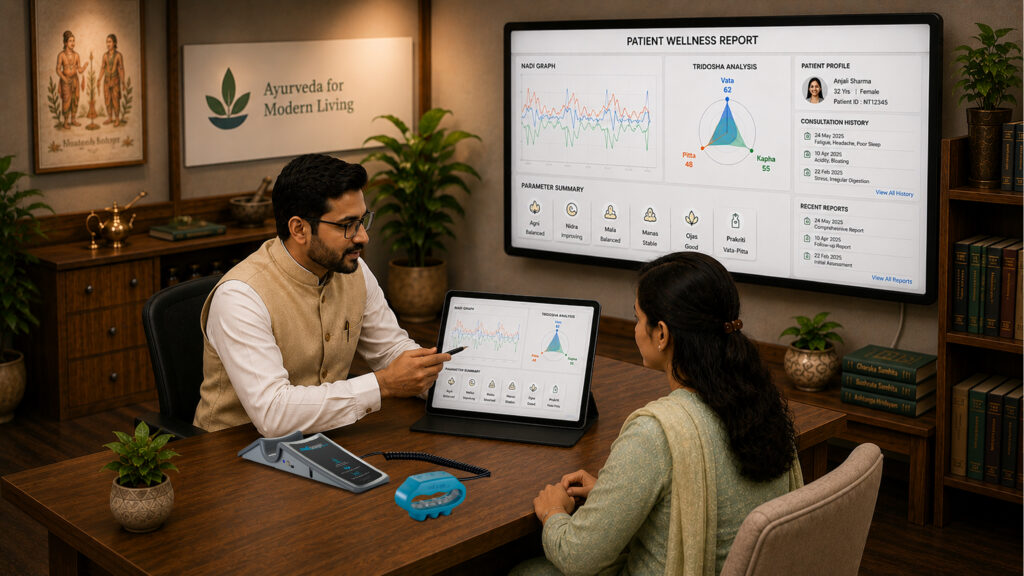
The Ayurvedic clinic of the future may not be defined simply by how traditional or modern it looks. Instead, it may be defined by how effectively it combines the strengths of both.
For young vaidyas, starting a clinic with tools such as Nadi Tarangini can mean building a practice where traditional Ayurvedic assessment is supported by digital documentation, structured consultations, visual communication, and longitudinal follow-up.
It is not about making Ayurveda more technological for the sake of technology.
Giving Young Vaidyas a Foundation for Growth
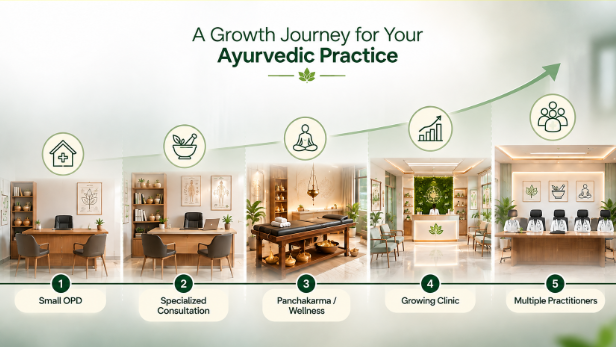
A young practitioner may begin with a small OPD and a limited number of patients. Over time, the clinic may expand into specialized consultations, Panchakarma, preventive health programs, wellness packages, or multiple practitioners.
Starting with digital systems can also become valuable as the practice grows.
If patient documentation and assessment processes are already structured, scaling the practice becomes easier. More importantly, digital records can potentially create opportunities for practitioners to study patterns within their own clinical practice and develop a more data-oriented approach to observation and follow-up.
Creating a Differentiated Clinic
In a competitive healthcare environment, differentiation matters.
A specialized Ayurvedic clinic supported by a structured digital workflow can offer patients a distinctive experience.
Nadi Tarangini can provide specialized expertise, personalized Ayurvedic assessment, digital pulse assessment along with structured documentation. Together, these elements can help a young practitioner build a clinic that feels contemporary without losing its Ayurvedic foundation.
The Future of Specialized Ayurveda
For young practitioners, the goal should not be to create a clinic that is simply “high-tech.”
The goal should be to create a clinic where technology makes good Ayurvedic practice more organized, more understandable, more consistent, and easier to follow over time.
That combination can help shape a new generation of Ayurvedic practices that are deeply rooted in tradition while confidently designed for the expectations of modern healthcare.
Helping Young Practitioners Communicate Better
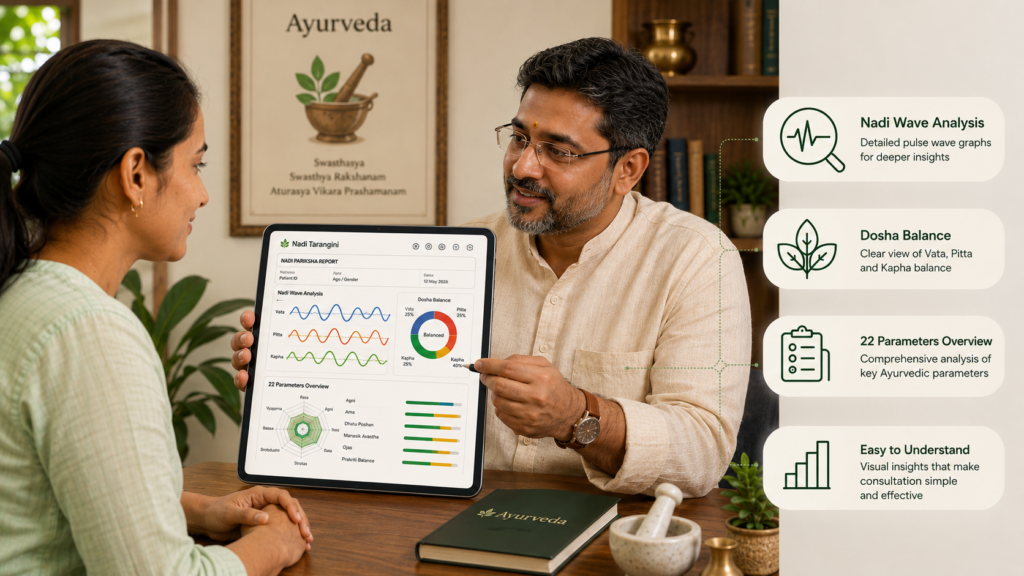
One of the biggest challenges for a new practitioner is communicating Ayurveda to patients who may be unfamiliar with Ayurvedic terminology. Concepts such as Dosha, Prakriti and Vikruti can be difficult to explain through words alone.
Digital reports generated by Nadi Tarangini can provide a visual reference during the consultation.
The practitioner can use the report to explain observations, discuss the patient’s concerns, and connect the Ayurvedic assessment with diet, lifestyle, daily routine, and personalized recommendations.
Technology does not replace conversation. It can make the conversation easier to understand.
For a young practitioner who is still building patient trust and communication skills, this can be particularly valuable.
Creating a More Structured Consultation
Nadi Pariksha with Nadi Tarangini can contribute to this transformation by helping practitioners in following ways
- Digital Nadi pariksha with digital reports
- Systematic consultation
- Maintain organized records.
- Create a modern patient experience.
A modern clinic needs a repeatable workflow. Nadi Tarangini can become one component of that workflow.
Instead of every consultation following an entirely informal process, the practitioner can establish a structured sequence by use of Nadi Tarangini. This can help maintain consistency as patient numbers increase.
It can also be useful when a clinic eventually expands and more than one practitioner becomes involved in patient care.
Moving Beyond Paper-Based Records
Case papers of patients are very important documents in practice but they can become difficult to manage as a practice grows.
Digital documentation offers young practitioners an opportunity to establish organized records from the beginning.
A patient’s digital record can bring together relevant consultation information, pulse assessment reports, recommendations, and follow-up observations. This becomes particularly important in long-term care.
When the patient returns after several weeks or months, the practitioner can review previous information rather than depending entirely on memory or scattered paper records.
Turning Follow-Up into a Continuous Journey
Ayurvedic care is often a process rather than a one-time interaction.
A patient may require multiple consultations, lifestyle modifications, treatment changes, and periodic reassessment.
Nadi Tarangini can contribute to this longitudinal approach by creating records that can be reviewed during subsequent consultations.
Meeting Modern Patient Expectations
Patients today are accustomed to digital experiences. They book appointments online, receive digital reports, store documents electronically, and expect information to be presented clearly.
They increasingly want to understand their health rather than simply receive instructions.
An Ayurvedic clinic does not need to become “high-tech” for technology’s sake.
But incorporating meaningful digital tools can help create a patient experience that feels organized and contemporary.
A digital Nadi assessment can become one visible part of that experience.
Specialization Creates Opportunities for Clinical Learning.
A focused practice also creates an opportunity for practitioners to learn from their own clinical experience.
As the number of patients grows, structured records can potentially help practitioners identify recurring patterns within their practice.
Nadi Tarangini-generated information, when combined with appropriate clinical documentation, can contribute to a more structured approach to clinical observation and practice-based learning.
Nadi Tarangini can help practitioner to understand
- Common presenting concerns associated with Nadi
- Recurring clinical patterns
- Follow-up trends
- Patient responses over time
- Lifestyle factors
- Patterns observed within specific patient groups
It creates a better-organized foundation for clinical learning, documentation, and future research.
Digital records may also help young practitioners learn from their own clinical practice.
Over time, structured patient information can help practitioners review patterns within their patient population, observe changes across follow-ups, and organize clinical experiences more systematically.
For young Ayurvedic practitioners, starting a clinic today is an opportunity to design the practice differently from the beginning.
They can build systems that combine the depth of traditional Ayurveda with the advantages of digital healthcare.
The objective is not to make Ayurveda dependent on technology. The objective is to use technology where it adds value – while keeping Ayurvedic knowledge, clinical reasoning, and the Vaidya-patient relationship at the heart of practice.
For the next generation of Ayurvedic practitioners, this combination can offer a practical pathway toward building clinics that are traditional in their foundation, modern in their workflow, and aligned with the expectations of today’s patients.
Summary
Nadi Tarangini can play an important role in helping young Ayurvedic practitioners build modern, structured, and patient-centric clinics without compromising the traditional foundations of Ayurveda. By adding a digital layer to Nadi Pariksha, it can support structured pulse assessment, visual reporting, systematic consultations, organized documentation, and better patient communication. Digital reports can help practitioners explain Ayurvedic concepts such as Prakriti, Vikruti, and Dosha in a more understandable way, while digital records can make follow-up consultations more organized and support continuity of care.
For young Vaidyas, adopting digital tools from the beginning can also create a strong foundation for practice growth, specialization, and practice-based learning. As patient records accumulate, structured information can help practitioners review follow-up trends, recurring patterns, lifestyle factors, and patient responses over time. Nadi Tarangini is therefore not about replacing traditional Ayurvedic wisdom with technology, but about using technology where it adds value – helping create clinics that are traditional in their clinical foundation, modern in their workflow, and aligned with the expectations of today’s patients.