
From Pulse to Vitality: Understanding Ojas Through Nadi Tarangini

From Pulse to Vitality: Understanding Ojas Through Nadi Tarangini
 Dr. Gayatri Mulye
In Ayurveda, Ojas is the vital essence of the body responsible for physical strength, immunity, and radiant health, often translated as “vigour” or “vitality.”
According to classical Ayurvedic texts, Ojas is the refined end-product of healthy digestion and metabolism. When food is digested efficiently and all seven body tissues are nourished properly, Ojas is formed. It is considered the finest end-product of digestion and the ultimate protector against disease.
A Deeper Look at Ojas: The Cornerstone of Holistic Health
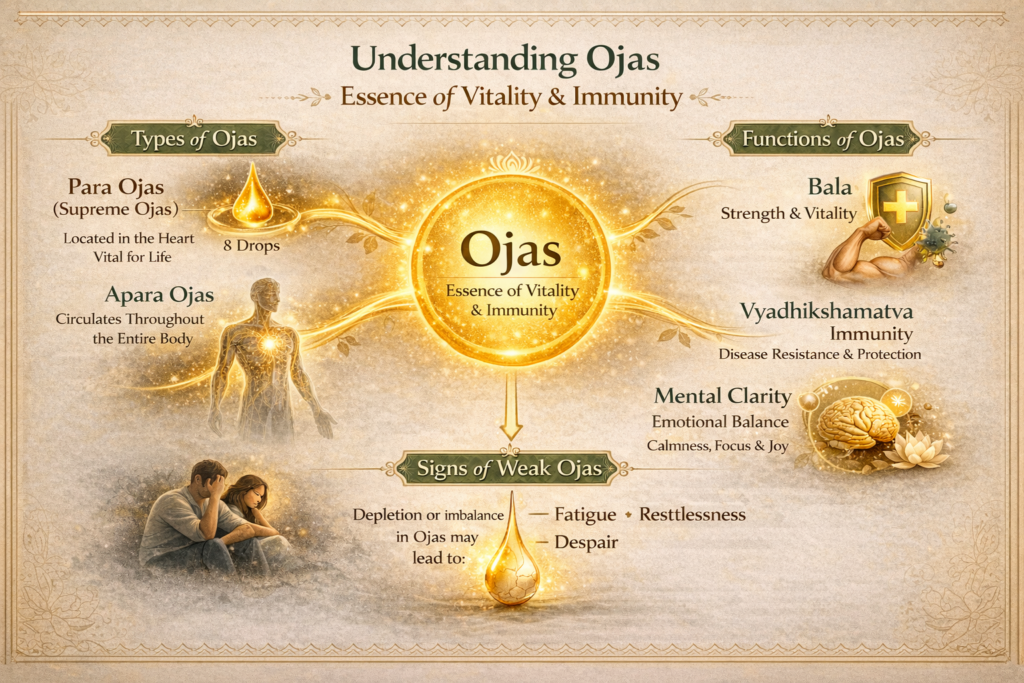
Ojas is the supreme essence of all seven bodily tissues (Dhatus), ranging from blood plasma to the reproductive fluids. When your digestion (Agni) is strong, it properly extracts nutrients from
your food, creating healthy tissues and culminating in the formation of Ojas.
The Two Types of Ojas According to classical Ayurvedic texts,
- Para Ojas (Supreme Ojas): Exists in minute quantities (about eight drops) and is located primarily in the heart. It is vital for life itself, and any significant depletion of this type is life-threatening.
- Apara Ojas (Mediocre Ojas): Circulates throughout the entire body to support physical and mental strength, stamina, and cellular nourishment.
Ojas in Ayurveda is seen as the purest essence of Kapha. It is also considered the body’s natural elixir that provides strength and vigour from within.
Ojas is the Bala of body and responsible for Vyadhikshamatva. Weak Ojas can often impair your ability to perform mentally and physically. This leads to discontentment and a lingering sense of despair.
Sometimes, weak Ojas can also make you feel restless and cloud your decision-making ability. This is very common in the modern pace of life. Ojas is an important element when it is vitiated, it develops many pathological conditions
Relationship Between Ojas and Immunity
Ayurveda closely links Ojas with the body’s defense system. While it is not identical to modern immunity, it represents the body’s deeper adaptive strength and resilience.
According to Ayurveda ,ojas and immunity are intricately linked to the concept of rejuvenation or rasayana .
Strong Ojas helps maintain:
- Resistance to disease
- Faster recovery
- Balanced hormones and nervous system
- Emotional steadiness under stress
In our stressed-out, overly busy modern world, we often don’t give ourselves ample time for rest, nourishment, and self-care. The practice of rejuvenation helps to maintain ojas. It is all about slowing the aging process, boosting our immunity, and bringing our body, mind, and spirit back into a state of harmonious balance.
Ojas is the subtle Ayurvedic energy reserve, a psychophysical container linked to vitality, emotional resilience, and may support immune function when mindfully cultivated.
Modern Lifestyle and the Depletion of Ojas
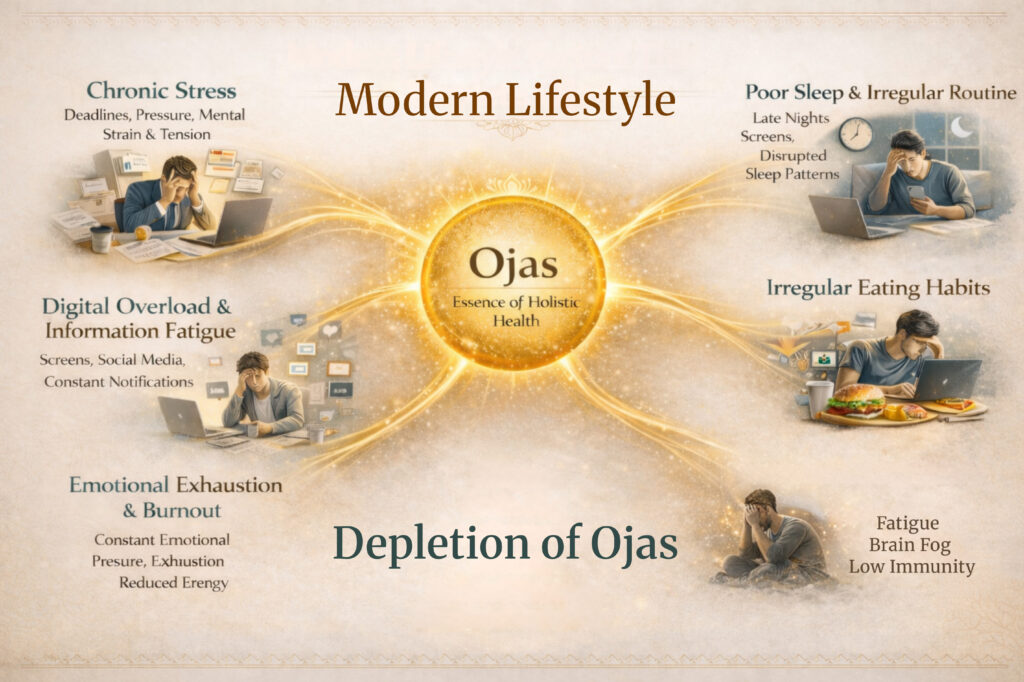
Modern living constantly places demands on the nervous system and metabolism. Over time, these stressors can slowly weaken vitality even when outwardly everything appears “normal.”
While ancient Ayurvedic texts described Ojas thousands of years ago, its relevance has become even more significant in today’s world of chronic stress, burnout, poor sleep, irregular eating habits, emotional overload, and constant stimulation.
Many people experience fatigue, reduced focus, weakened immunity, anxiety, or emotional exhaustion long before laboratory tests reveal any major disease. These are signs of impaired Ojas.
On the other hand, when tended to mindfully, our ojas becomes a reserve of robust vitality and the key to a healthy immune system.
Some common contributors to Ojas depletion include:
Chronic Stress
Continuous mental pressure activates prolonged stress responses within the body. Over time, this can disturb sleep quality, digestion, emotional balance, and recovery mechanisms — all closely linked to the preservation of Ojas.
Poor Sleep and Irregular Routines
Ayurveda places great emphasis on circadian rhythm and restorative sleep. Late nights, inconsistent schedules, excessive screen exposure, and inadequate rest gradually weaken the body’s regenerative capacity.
Irregular Eating Habits
Skipping meals, overeating, processed foods, eating under stress, or inconsistent meal timing can weaken digestion (Agni). Since healthy tissue formation depends on balanced digestion, disturbed Agni may eventually affect Ojas.
Emotional Exhaustion and Burnout
Constant emotional strain, unresolved stress, and lack of recovery time can affect both psychological and physiological resilience. Ayurveda recognizes the close relationship between emotional wellbeing and vitality.
Overstimulation and Digital Fatigue
Continuous sensory input from devices, social media, multitasking, and information overload may contribute to nervous system fatigue and reduced mental clarity, gradually impacting overall balance.
In Ayurveda, true health is not merely the absence of disease. It is the presence of vitality, emotional stability, resilience, clarity, balanced immunity, and the capacity to adapt to life’s challenges with ease.
A person with balanced Ojas often feels energetic yet calm, emotionally steady, mentally clear, and physically resilient.
Unlike acute disease symptoms, changes in Ojas tend to appear gradually and subtly. This makes early observation extremely important.
Evaluating Ojas with Nadi Tarangini: A Pulse-Based Approach to Wellbeing
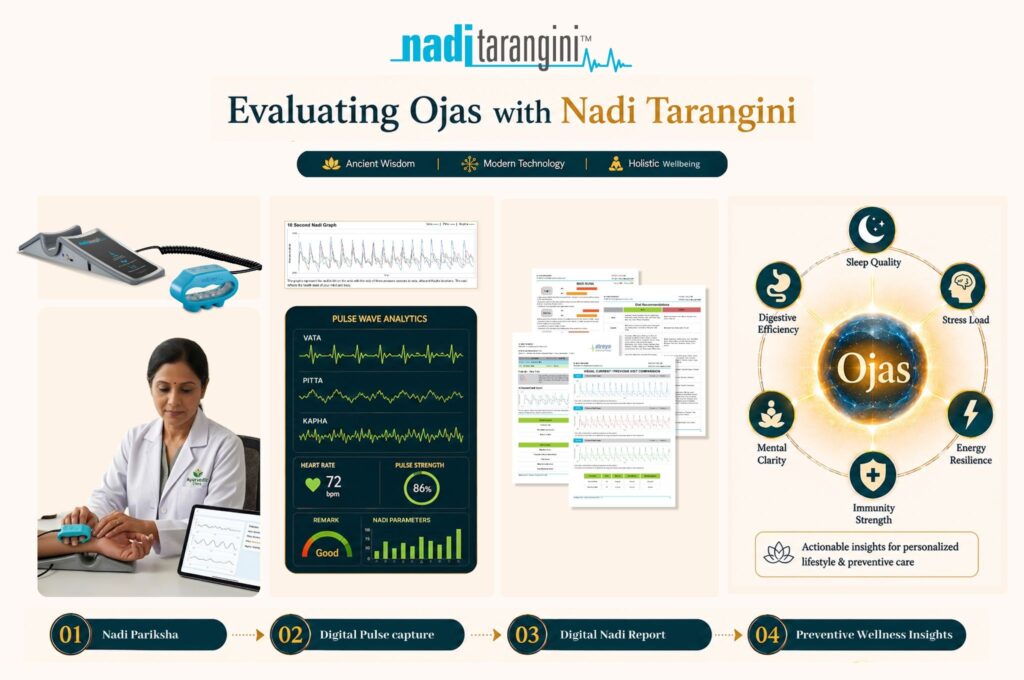
Pulse examination (Nadi Pariksha) has traditionally been an important Ayurvedic assessment method used to understand patterns of balance and imbalance within the body. Traditional pulse examination depends heavily on practitioner experience and subjective interpretation.
Today, modern pulse assessment technologies such as Nadi Tarangini are helping bridge traditional Ayurvedic wisdom with contemporary preventive healthcare by enabling practitioners to observe subtle physiological patterns associated with vitality and recovery capacity.
One of Ayurveda’s most valuable contributions to healthcare is its focus on identifying imbalance before it progresses into disease. rather than waiting for pathology to become visible. Ayurveda emphasizes recognizing subtle shifts in function, energy, and resilience.
Nadi Tarangini is a pulse-based wellness assessment system developed to digitally capture and analyze pulse signals through Ayurvedic principles.
Using sensitive sensors and computational analysis, Nadi Tarangini helps practitioners observe subtle pulse characteristics that may relate to physiological and energetic patterns within the body. By combining Ayurvedic knowledge with digital technology, it offers a more structured and reproducible approach to pulse assessment.
In the context of Ojas, pulse-based wellness analysis may help practitioners observe patterns associated with:
- Stress load and recovery capacity
- Nervous system imbalance
- Digestive efficiency
- Sleep-related disturbances
- Energy fluctuations
- Early signs of physiological strain
Rather than functioning as a disease-diagnosis tool alone, such assessment can support preventive wellness strategies and personalized lifestyle guidance in the following manner.
Observing Early Signs of Reduced Vitality
Vitality in Ayurveda is closely associated with Ojas — the subtle essence linked to resilience, immunity, strength, emotional stability, and recovery capacity.
When vitality begins to decline, changes may appear gradually through patterns such as:
- Persistent fatigue despite rest
- Mental exhaustion or burnout
- Poor stress adaptability
- Disturbed sleep
- Digestive irregularities
- Emotional irritability or anxiety
- Reduced ability to recover from exertion
Pulse-based assessment through Nadi Tarangini may help practitioners observe functional trends connected to these states before they become more pronounced.
Identifying Stress and Recovery Patterns
Modern lifestyles often keep the nervous system in a prolonged stress-response state. Over time, this can affect sleep quality, digestion, emotional balance, and overall resilience.
By analyzing pulse variability and broader pulse characteristics, Nadi Tarangini may assist practitioners in identifying patterns associated with:
- Nervous system overload
- Chronic stress adaptation
- Irregular energy cycles
- Reduced restorative capacity
- Imbalances between activity and recovery
This allows wellness recommendations to become more personalized and preventive rather than reactive.
Supporting Personalized Wellness Planning
One of the key strengths of pulse-based assessment is its individualized approach.
Two people with similar symptoms may show very different underlying imbalance patterns.
By identifying subtle imbalances early, practitioners can recommend personalized lifestyle, dietary, and wellness practices aimed at supporting restoration before deeper imbalance develops.
Supporting and Preserving Ojas
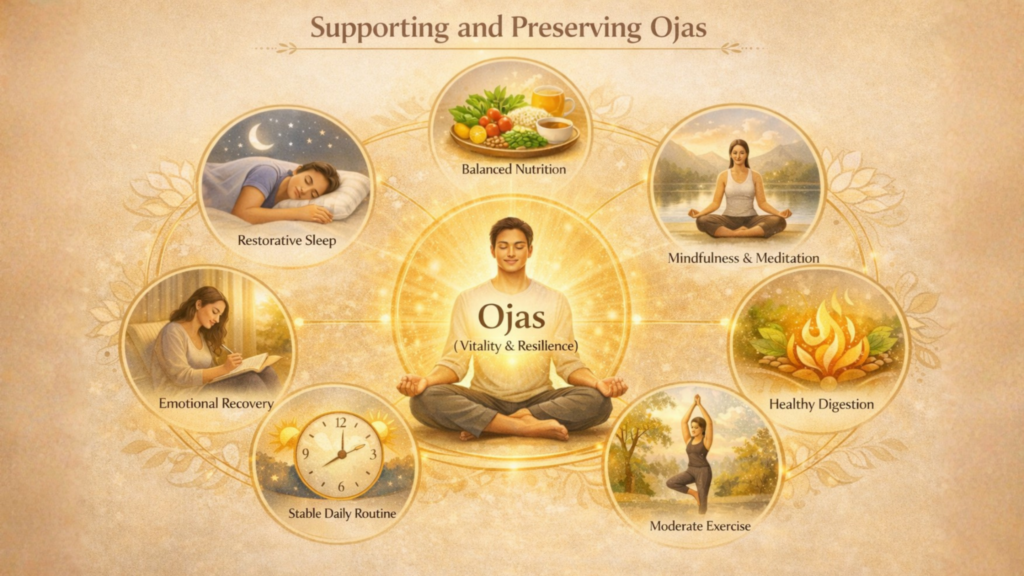
Ayurveda emphasizes that Ojas is cultivated through consistent daily habits that nourish both body and mind. Some important approaches include
- Maintaining regular sleep and wake cycles
- Eating fresh, balanced meals at consistent times
- Managing stress through mindfulness and relaxation practices
- Supporting healthy digestion
- Creating time for emotional recovery and rest
- Practicing moderate exercise without exhaustion
- Building stable daily routines
Small lifestyle improvements practiced consistently often have a profound long-term effect on vitality and resilience.
From an Ayurvedic perspective, pulse assessment may provide insights into patterns linked with weakened Ojas, ultimately, supporting Ojas is less about quick fixes and more about creating sustainable habits that nourish the body, calm the mind, and strengthen the body’s natural capacity for balance and recovery.
The goal is not merely symptom management, but supporting the body’s natural ability to restore balance and resilience over time. These experiences may reflect early disturbances in the body’s adaptive and restorative systems. From an Ayurvedic perspective, they may indicate declining Ojas and impaired balance long before clinical disease develops.
Ojas as a Practical Marker of Preventive Health
The modern healthcare conversation is increasingly shifting toward prevention, resilience, recovery, and long-term wellbeing. Concepts like stress adaptation, autonomic balance, recovery capacity, and lifestyle medicine are now central to wellness discussions worldwide.
Ayurveda’s understanding of Ojas aligns closely with these goals. Instead of viewing vitality as a vague or philosophical idea, Ojas can be understood as a practical reflection of how well the body sustains balance under physical, emotional, and environmental pressures.
Technologies such as Nadi Tarangini may help bring measurable insights into this traditionally qualitative concept by enabling practitioners to monitor subtle changes over time and recommend timely interventions.
In today’s fast-paced world, many individuals experience declining energy, emotional exhaustion, and chronic stress long before conventional disease markers appear.
Ayurveda offers a valuable perspective by recognizing these subtle changes as early disturbances in vitality and resilience — closely connected to the state of Ojas.
Through systems like Nadi Tarangini, ancient Ayurvedic pulse assessment is evolving into a modern wellness approach that combines traditional insight with digital analysis. By helping practitioners observe subtle imbalances earlier, pulse-based assessment may support more personalized and preventive healthcare strategies.
Summary
This blog explores the Ayurvedic concept of Ojas, the subtle essence responsible for vitality, immunity, emotional resilience, mental clarity, and overall wellbeing. It explains how modern lifestyle factors such as chronic stress, poor sleep, irregular eating habits, emotional exhaustion, and burnout gradually weaken Ojas long before visible disease symptoms appear.
The article highlights Ayurveda’s preventive approach to health by focusing on early signs of imbalance rather than waiting for disease to manifest. It also discusses the role of pulse assessment (Nadi Pariksha) and how Nadi Tarangini combines traditional Ayurvedic wisdom with digital pulse analysis to help practitioners observe subtle physiological and energetic imbalances related to stress, recovery, and vitality.
By connecting ancient principles with modern wellness technology, the blog positions Ojas as a practical and clinically relevant indicator for preventive healthcare, lifestyle management, and long-term wellbeing.