
First Clinic, Right Clinic: A Step‑by‑Step Guide for Young Ayurvedic Doctors to Design a Modern OPD
First Clinic, Right Clinic: A Step‑by‑Step Guide for Young Ayurvedic Doctors to Design a Modern OPD
 Dr. Gayatri Mulye
For many young Ayurvedic doctors, opening the first clinic is both exciting and intimidating.
In Ayurveda, Chikitsa Chatushpada means the four essential pillars required for successful chikitsa. For a new clinic, understanding this concept helps a young vaidya build a strong, ethical, and effective practice from day one.
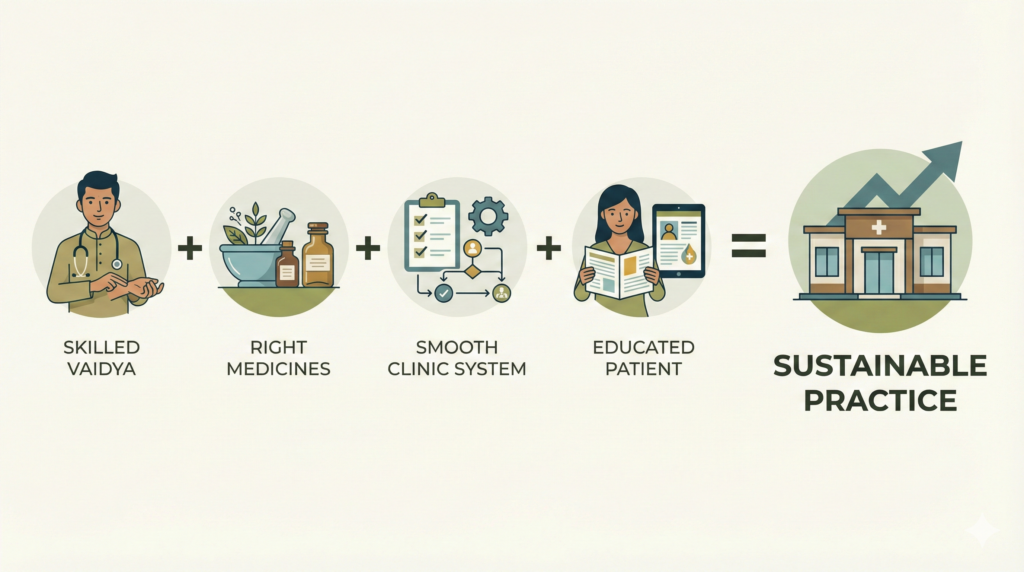
The key formula for successful practice according to Chikitsa Chatushpada is
Skilled Vaidya + Right Medicines + Smooth Clinic System + Educated Patient = Sustainable Practice
Understand the Purpose of Your First Clinic
You don’t need a large space, heavy investment, or hospital-like setup to start first clinic. What you need is clarity, simplicity, and smart planning.
Your first clinic is not meant to look like a multispecialty hospital which can offer every therapy from day one or impresses with size or luxury.
Its real purpose is to build trust, deliver consistent clinical results, create a repeat patient base and establish your identity as a serious Ayurvedic physician.
Your first clinic’s purpose is to build clinical credibility. Design your clinic to support you as a vaidya—your thinking, your listening, your growth.
Your first clinic should help you develop:
- Simple, consistent record-keeping
- Ethical pricing confidence
- A repeatable consultation flow
Your first clinic is a foundation, not a monument.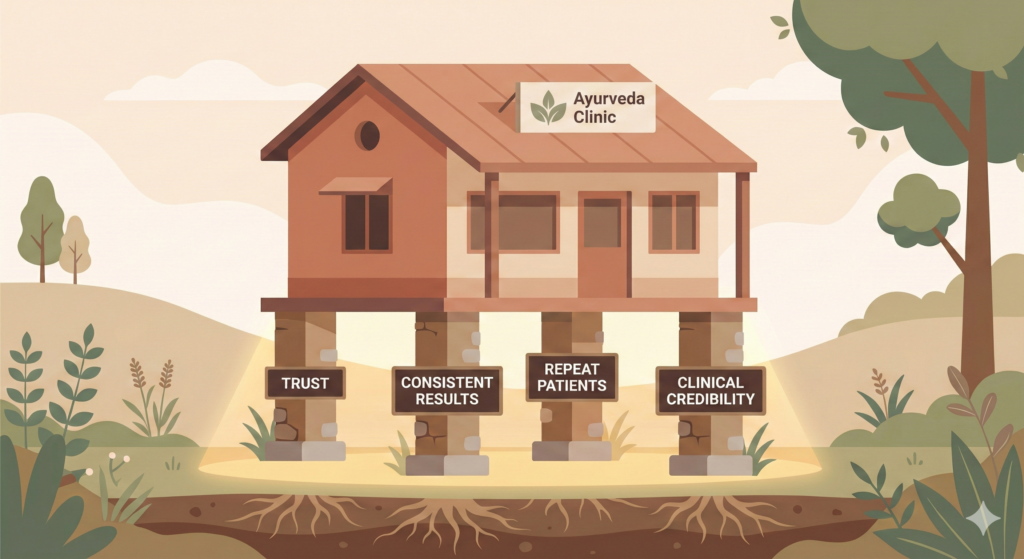
Entering Into Right Space for Your Clinic
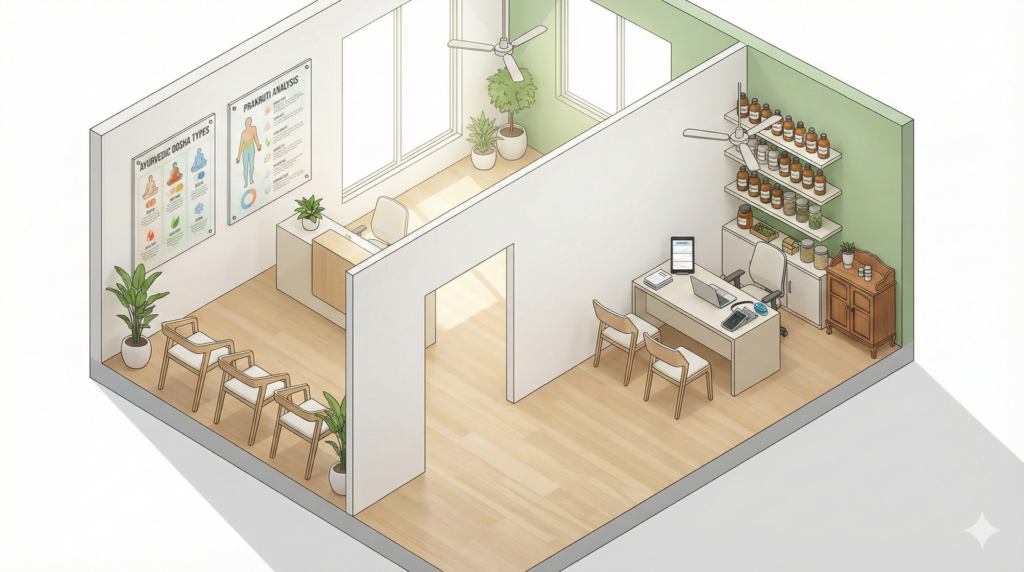
A modern Ayurvedic OPD can function efficiently in 500–1000 sq ft. Patients value clarity and cleanliness more than square footage.
Quiet, well-lit, ventilated consulting area reflects positivity in your clinic. It should contain all the necessary equipments required for examination.
Meaningful Ayurvedic visual (Dosha chart, Ashtanga Hridaya quote, Prakruti and its characteristics) informative charts will uplifts waiting area corum. Your clinic should silently say, “This doctor respects tradition but practices in the present.”
Minamilist furniture, waiting area filled with informative charts and calm consultation room will be enough to build meaningful Ayurvedic practice.
Basic diagnostic devices are not a luxury; they are a clinical necessity
Whether you practice Ayurveda, modern medicine, or integrative care, accurate diagnosis begins with simple measurements. These devices build trust, improve outcomes, and protect you professionally.
Ayurveda emphasizes on Ashtavidha Rugna Pariksha. Apart from that without objective parameters like BP, pulse rate, or weight, your assessment remains incomplete.
Diagnostics improve clinic flow and credibility. Well-equipped clinic looks professional, builds patient confidence, allows systematic record-keeping that supports follow-up comparison.
Adopting Digital Record Systems For Clinics
One of the biggest mistakes young doctors make is poor documentation.
Most vaidyas don’t lose time in diagnosis. They lose time in writing repetitive OPD notes, explaining the same ahara-vihara advice again and again and answering repetitive questions.
Smart tools remove these frictions.
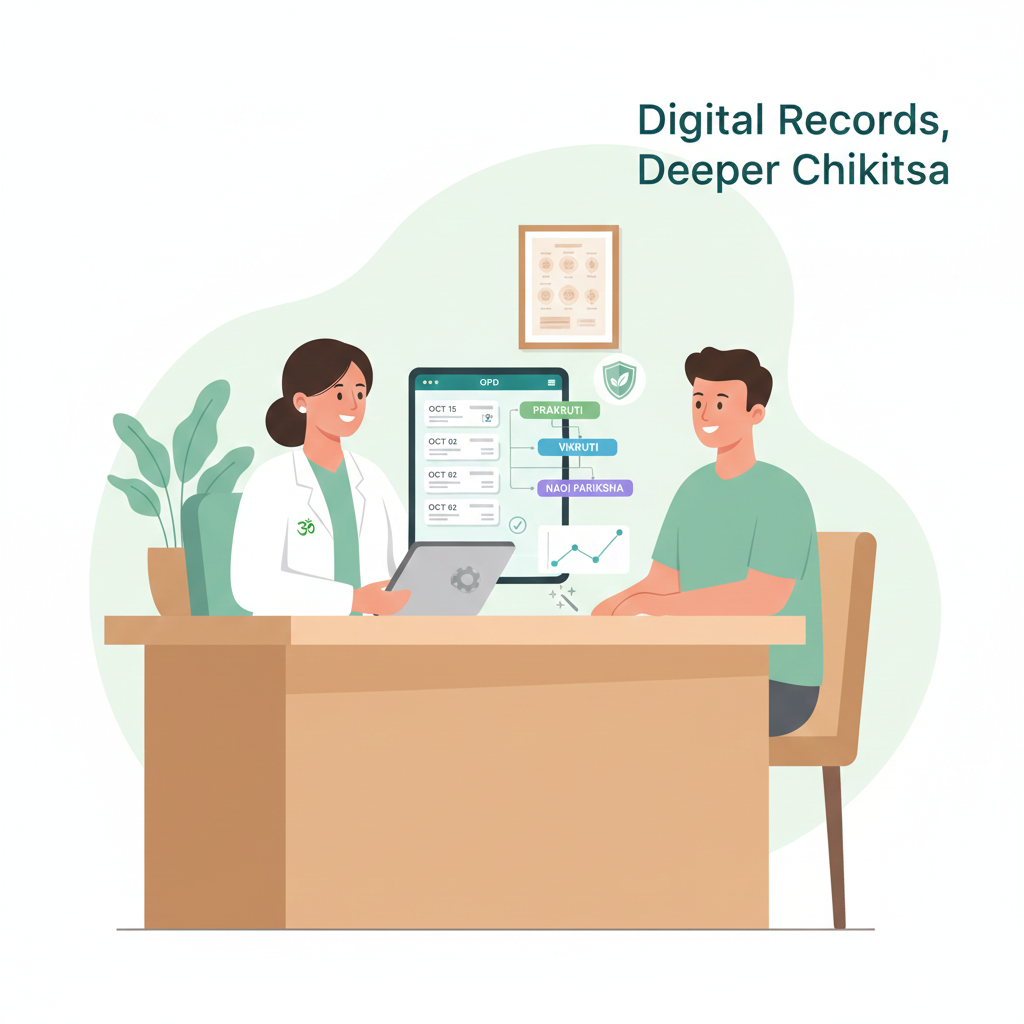
Digital Records Systems helps clinics in following ways 
- Save consultation time
- Track patient history across visits
- Link Prakruti, Vikruti, Nadi Pariksha, and treatments over time
- Build credibility as a modern yet classical Vaidya
Smart tools free time for deeper listening and personalised chikitsa instead of adding complexity.
Smart Clinics With Smart Diagnostic Tool – Nadi Tarangini
Nadi Tarangini is a digital pulse recording system that modernizes the ancient Ayurvedic practice of Nadi Pariksha (pulse diagnosis). Instead of just feeling the pulse by hand, it uses sensors and software to capture, graph, and analyze pulse signals at the wrist (Vata, Pitta, Kapha points) and then provides detailed diagnostic data.
Traditional pulse diagnosis relies on the subjective skill of a practitioner.
Nadi Tarangini provides measurable pulse wave data, reducing variability between practitioners.
Seamless integration with tools like Nadi Tarangini increases patient flow to the clinic automatically.
Tools like Nadi Tarangini accomplished with digital Nadi pariksha and simple digital record-keeping can quietly handle structure and documentation—so the Vaidya is free to listen more deeply, observe more clearly, and personalise chikitsa with confidence.
Nadi Pariksha by Nadi Tarangini have following features –
- Objective Data With brief records related to Nadi based on Ayurvedic principles
- Minimal time for pulse capturing
- Can be repeated during follow-ups for comparison
Subtle shifts in dosha balance become visible over time. This helps young doctors to gain confidence in pulse interpretation. It also builds patients trust through visible, consistent documentation. Digital records help patients understand why they are doing the treatment.
Nadi Tarangini helps with follow-Up continuity without confusion.
Long-Term Benefits for Young Vaidyas
- Easy follow-ups & chronic case tracking
- Ability to show progress objectively
- Foundation for data-driven Ayurveda
- Faster decision-making
- Confident modifications in chikitsa
- Long-term case clarity
Smart tools are not about modernising Ayurveda. They are about protecting the Vaidya’s time, attention, and clarity—so personalised chikitsa can deepen with every visit.
Building a new clinic is more than arranging rooms and equipment, it is the foundation of your identity as a physician. For a young Ayurvedic doctor, the first clinic is where classical knowledge meets real-world practice, patient trust is slowly earned, and clinical confidence begins to grow. Thoughtfully designing this space from day one, its purpose, flow, and systems helps create a practice that is ethical, efficient, and sustainable, while staying true to the core principles of Ayurveda.
Conclusion: Building a Strong Foundation for Modern Ayurvedic Practice
The first clinic for a young Ayurvedic doctor is more than a physical space; it is the beginning of building clinical identity, patient trust, and long-term practice. Guided by the principles of Chikitsa Chatushpada, a successful clinic depends on the right balance between skilled practice, smooth systems, and meaningful patient care. Simplicity, proper planning, ethical practices, and a structured consultation flow play an important role in creating a sustainable OPD setup.
Modern clinic systems, objective diagnostic methods, and digital record management can support better organization, continuity, and follow-up care without taking away from the core principles of Ayurveda. Tools like digital documentation and Nadi Pariksha systems help create consistency and clarity, allowing the Vaidya to focus more deeply on observation, listening, and personalized chikitsa. Thoughtfully designing the first clinic creates a foundation that supports growth, confidence, and long-term clinical practice.